To the Classroom
conversations with researchers and Educators
The collection of knowledge and advice about best practices in literacy education is always evolving. This is both a gift and a challenge. In my new podcast for educators, I interview leading researchers and scholars to understand current, relevant, and digestible answers to all things literacy, learning, and best-practice, regardless of an educator’s approach to literacy instruction. I’m joined by colleagues from my team, and classroom educators, to debrief the researcher interview and answer the question, “How will we take what we’ve learned to the classroom?”
Transcripts

Jennifer Serravallo interviews Dr. Leigh Patel about her recent essay on decolonizing.net: “What I learned from debating the Science of Reading Nearly 20 Years Ago.” Dr. Patel is a transdisciplinary scholar whose research focuses on both the ways schooling delivers inequities and how education can be a tool for liberation. In the second half, she’s joined by Shawna Coppola, author of the recent book Literacy for All: A Framework for Anti-Oppressive Teaching to discuss the interview and takeaways for the classroom.

Today’s guest is the brilliant Zaretta Hammond, author of Culturally Responsive Teaching and the Brain. We’ll talk about the science behind her recommended “six core design principles” that she calls “culturally responsive brain rules”. Later, I’m joined by my colleague Jerry Maraia for a continued conversation about practical takeaways. This is To the Classroom, and I’m your host, Jennifer Serravallo.

My guest today is Dr. Leala Holcomb, a researcher of deaf education at the University of Tennessee, Knoxville, who accepted my invitation to teach us all about what true equity and inclusion looks like when supporting deaf children’s language and literacy development. At Dr. Holcomb’s request, I interviewed them in writing via a collaborative online document, and I have hired a voice actor, Ginna Hoben, to read Dr. Holcomb’s words for this podcast interview. As with all episodes, a transcript of this episode is available at my website, JenniferSerravallo.com/podcast.

My guest today is Chris Wenz, researcher and teacher, whose dissertation focused on profiles of adolescents with Autism Spectrum Disorders. We begin our conversation with an understanding of the diverse profiles of autistic individuals, and move into a conversation about considerations for literacy assessment and teaching. In the second part of the episode I’m joined by my colleague Elisha Li, a former elementary inclusion teacher, to discuss practical takeaways.

Dr. Karen Harris joins Jennifer Serravallo for Episode 29 of To the Classroom. Lainie Powell and Lea Leibowitz join for the post-interview conversation.

Dr. Steven Graham, lead author on the IES practice guides for What Works Clearinghouse, as well as a co-author of many meta-analyses about what effective writing instruction looks like, joins Jennifer Serravallo for Episode 28 of To the Classroom.

Today's guest is none other than THE Dr. P David Pearson. Usually I approach guests with a topic in mind, but because Dr. Pearson had just written on just about every topic there is to write about in the field of literacy education, I asked him what he wanted to discuss. He said: "how to design an ideal literacy block aligned to research." I love the topic and I hope you will too. As always, I'm joined by colleagues in the second half of the episode today. It's Gina Dignon and Macie Kerbs to talk about practical takeaways for the classroom. It's a long episode, but worth every minute.

Dr. H Richard Milner joins Jennifer Serravallo for Episode 26 of To the Classroom. Educational leaders Aeriale Johnson and Jerry Maraia join for the post-interview conversation.

Jennifer Serravallo interviews Dr. Laura Ascenzi-Moreno for Episode 25 of To the Classroom. Angie Forero and Cristy Rauseo, two bilingual educators, join for the post-interview conversation.

Jennifer Serravallo interviews Dr. Caitlin Ryan and Dr. Jill Hermann-Wilmarth about LGBTQ+ inclusivity in classrooms.

Jennifer Serravallo talks with Dr. Elizabeth Sulzby about pre-emergent and emergent literacy and language development.

Jennifer Serravallo interviews Dr. Haeny Yoon and Dr. Lalitha Vasudevan about play in early childhood and adolescence.

Today’s episode is a double – I have two guests to teach us about a speech to print approach to spelling and phonics instruction. John Walker is the UK-based creator of Sounds-Write. Jan Wasowicz is the US-based creator of Spell Links. We’ll talk about the differences–and benefits–of using a speech to print approach. Later, I’m joined by colleagues Macie Kerbs and Rosie Maurantonio, as well as the author of We Do Writing, Leah Mermelstein, for a conversation about practical takeaways for the classroom.

Jennifer Serravallo interviews Dr. Tim Rasinski about the Art and Science of teaching reading, and the decades of research on fluency instruction. The episode is jam-packed with practical advice for the classroom.

Today’s guests are Drs. Laura Steacy and Don Compton, researchers who explore and write about the skill Set for Variability. You’ll hear them talk about this new area of research which offers an explanation for how students self-correct pronunciations of words when reading, and may have interesting implications for how we learn to remember spellings of irregular words. After my interview, I’m joined by my colleagues Macie Kerbs and Lainie Powell for a discussion about takeaways for the classroom.

My guest today is Dr. Peng Peng, co-author of a recently-published meta-analysis that examined the role of strategy instruction with struggling readers in grades 3-12. The analysis sought to understand which strategies, and which strategy combinations, are most important to prioritize in a time-crunched intervention setting. Later, I’m joined by my colleague Elisha Li for a conversation about practical takeaways for the classroom.

My guests today are three authors of a recent article in The Reading Teacher about Maximizing Small Group Instruction: Dr. Kristin Conradi-Smith, Dr. Steve Amendum, and Tammy Williams. They’ll share essential recommendations for forming and conducting effective group lessons for readers. After our conversation, I’m joined by my colleagues Emily Strang-Campbell, Clarisa Leal, and Cristy Rauseo for a conversation about practical takeaways.

Today my guest is Dr. Margaret McKeown. We’ll start our conversation discussing vocabulary development and explicit vocabulary instruction, including how to choose words for instruction, how to teach words so students understand them deeply, and how to help students build connections between words. Our conversation then shifts to the Questioning the Author instructional intervention, which focuses on developing comprehension through conversation and can be used to foster independence and discussion amongst students. Later, I’m joined by my colleagues Gina Dignon and Rosie Maurantonio for a conversation about how we’ll bring what we learned to the classroom.
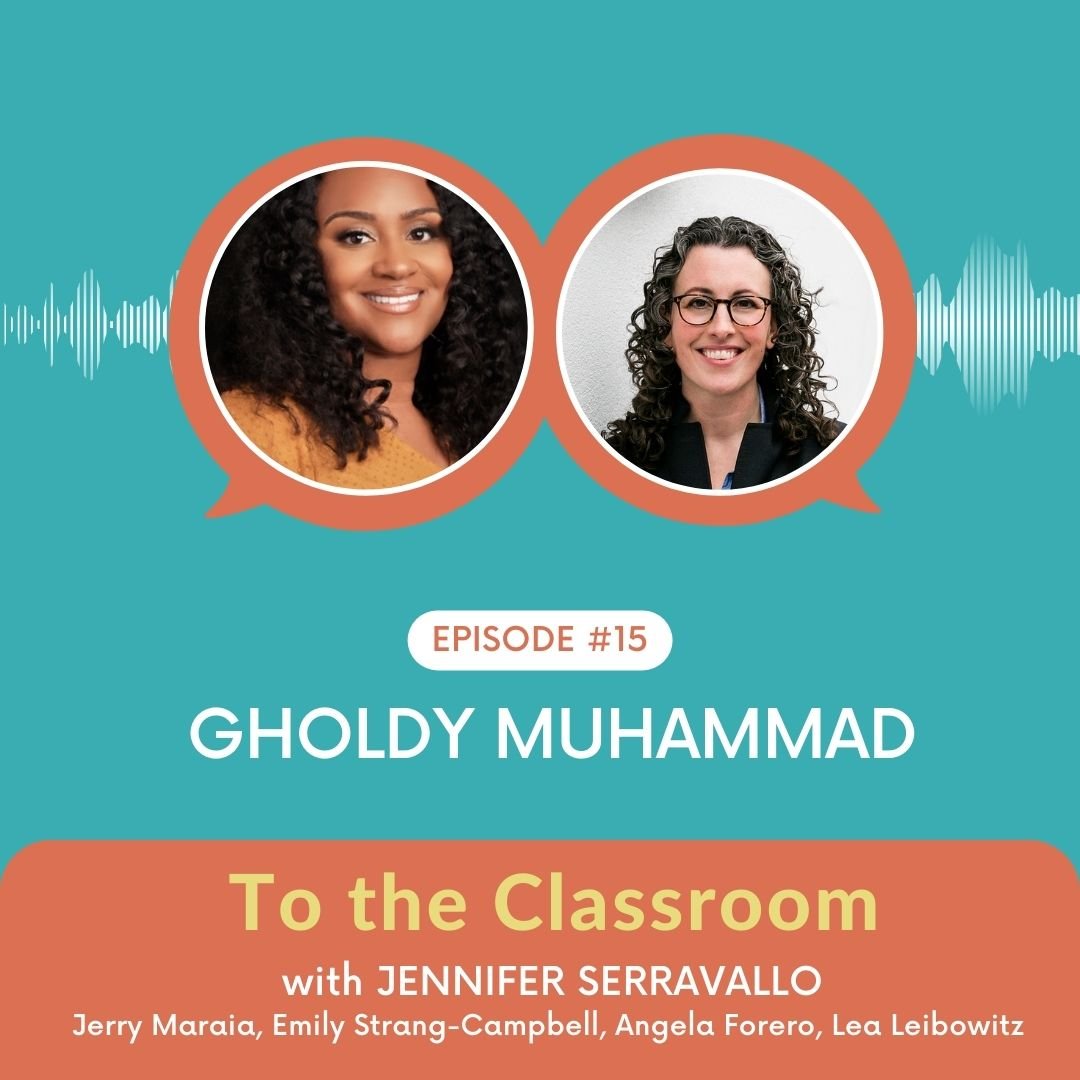
Jennifer Serravallo interviews guest Dr. Gholdy Muhammad about the importance of including qualitative research, her studies of the Black Literary Societies of the 1800s, and how that research has inspired her instructional framework which includes identity, skills, knowledge, criticality and joy. In the second half of the episode Jen is joined by colleagues Angie, Emily, Lea, and Jerry for a conversation about practical strategies and takeaways for the classroom.
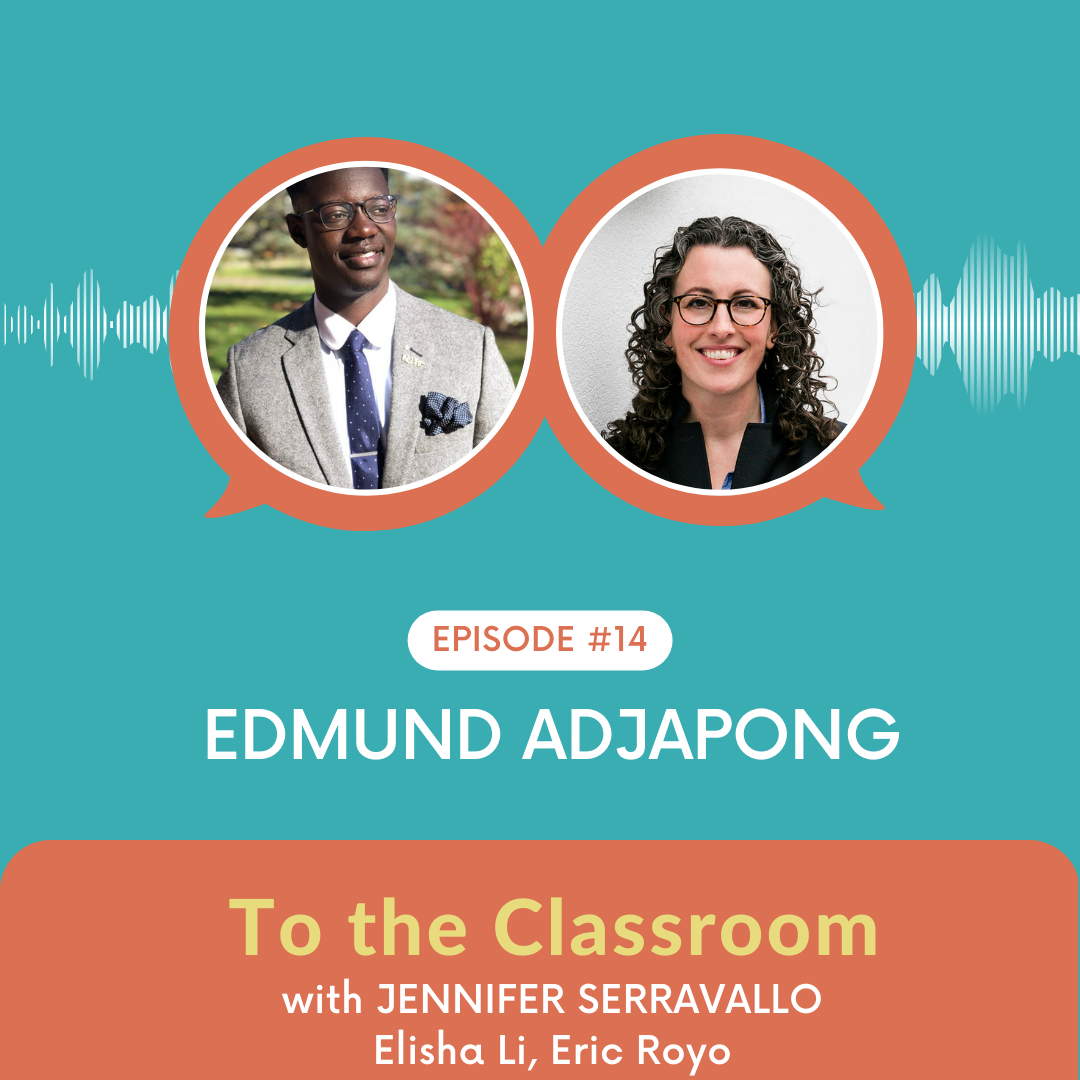
Jennifer Serravallo interviews Dr. Edmund Adjapong, a scholar whose work focuses on engaging youth through culturally responsive and sustaining pedagogies centered around embracing Hip Hop culture in the classroom. In the second half of the episode, Jen is joined her my colleague Elisha Li, and Eric Royo, elementary educator and founder and director of Hip Hop Building Blocks, for a discussion of ways to bring what we learned from Dr. Adjapong to the elementary and middle school ELA classroom.

Jennifer Serravallo interviews Dr. Carla España and Dr. Luz Yadira Herrera for a conversation about supporting bilingual and multilingual students in monolingual or dual language classrooms. They discuss culturally and linguistically-affirming and sustaining practices, their advice for choosing texts to use for literacy lessons, and they share examples of some lessons we can use in classrooms right away. In the second half, Jen is joined by her colleagues, bilingual educators and consultants, Cristy Rauseo, Clarisa Leal, and Angie Forero to discuss what we can bring to the classroom right away.
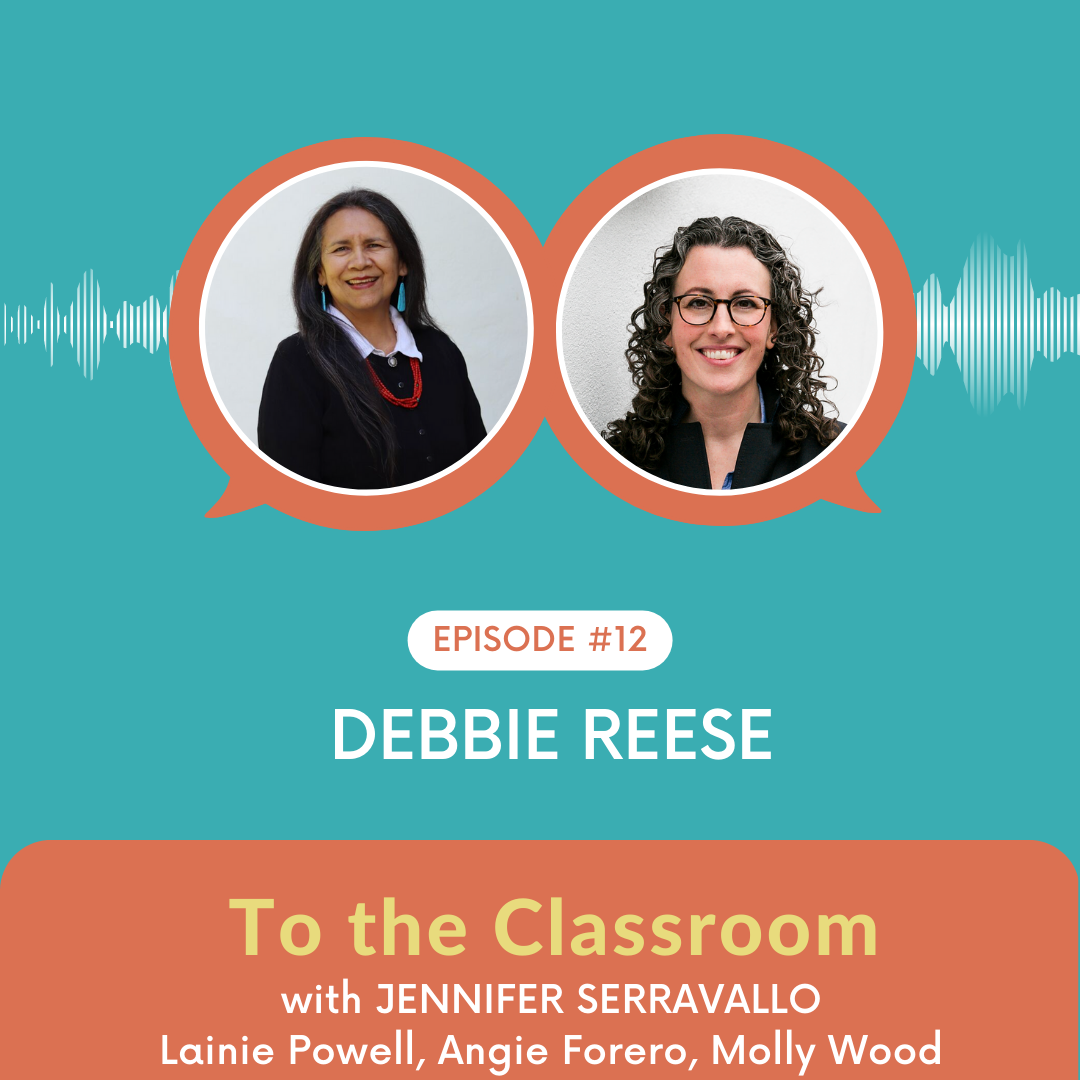
Jennifer Serravallo interviews Debbie Reese to talk about her scholarship focused on Native representation in children’s literature, her AICL resource, and advice for teachers about selecting texts to use in the classroom. In the second half, Jen is joined by colleagues Lainie Powell, Angie Forero, and Molly Wood to discuss practical takeaways.

Jennifer Serravallo interviews Dr. HyeJin Hwang about some of her recent studies focusing on knowledge building. They explore different models for understanding comprehension (Kinch’s Construction Integration Model and Connor’s Lattice Model), discuss implications for text selection and strategy instruction alongside knowledge-building. Jen is joined by colleague Gina Dignon for an extended conversation about practical takeaways.

Jennifer Serravallo, host of To the Classroom, interviews Dr. Tanya Wright, about her research focused on knowledge building and vocabulary, and comprehension. After the discussion about research, Jen is joined by college Macie Kerbs for a conversation about practical takeaways.

Newsletter

