Celebrating Research, Practice, and the Power of Humanizing Professional Learning
February 12, 2026
One of the greatest privileges of leading a team of literacy specialists is watching their thinking, practice, and impact grow—not only in classrooms, but also in the broader professional conversation. I’m thrilled to celebrate two consultants from my literacy consulting team whose practitioner research was recently published in a peer-reviewed journal. Their article offers a powerful example of what it looks like when professional learning is grounded in teacher voice, classroom realities, and a deep respect for the complexity of teaching writing.
The study, conducted by Jerry Maraia and Macie Kerbs, centers on a yearlong, job-embedded professional learning experience with a team of elementary writing teachers. At its heart is a simple but often overlooked idea: when professional learning is designed with teachers rather than for them, it becomes more than a compliance exercise—it becomes transformative.
A Professional Learning Model That Centers Teachers
The research documents a qualitative practitioner action research study focused on understanding which characteristics of professional learning teachers themselves identify as most effective in supporting writing instruction. Rather than relying on one-time workshops or top-down mandates, the professional learning described in the article was sustained across the school year and embedded directly into teachers’ classrooms.
Six two-hour sessions were held during the school day, with substitute coverage provided so teachers could engage fully. Each session followed a consistent, intentional structure:
Collaborative learning and planning, grounded in writing research and analysis of student work
Classroom-based application, where teachers tried strategies with students while receiving real-time feedback
Reflection and debriefing, allowing teachers to analyze instructional decisions and plan next steps
This structure reflects what decades of research tell us about effective professional learning: it must be content-focused, active, collaborative, modeled, coached, reflective, and sustained. What makes this work especially compelling, however, is how those elements were enacted in ways that honored teachers’ lived experiences.
Three key themes emerged from the study, all of which align closely with the approach our consulting team brings to schools.
1. Listening Responsively as a Method, Not a Moment
Teachers repeatedly identified responsive listening as foundational to the success of the professional learning. From the very first session, the consultants made space for teachers to share their frustrations, constraints, and hopes—particularly around teaching writing within scripted curricula and limited instructional time.
Rather than dismissing these realities, the professional learning was shaped by them. Teachers described feeling genuinely heard, respected, and validated as professionals. Over time, this responsive listening built trust and shifted the culture from guarded compliance to collaborative engagement. As one teacher reflected, being listened to “made me feel like a professional again.”
Listening responsively wasn’t an add-on; it was a pedagogical stance that guided every aspect of the work.
2. Elevating Teacher Agency Through Co-Design
A second defining feature of the professional learning was the deliberate elevation of teacher agency. Teachers were not passive recipients of predetermined content. Instead, they co-designed the focus of their learning based on analysis of student writing, shared goals, and ongoing reflection.
Together, the teachers identified priorities such as increasing student engagement in writing, differentiating instruction through small groups, and enriching the existing curriculum without abandoning it. These goals then shaped the sequence and content of subsequent sessions.
By positioning teachers as instructional decision-makers, and by grounding professional learning in their classrooms and students, the work supported what the research calls “artful shifts”: flexible, responsive teaching moves that go beyond program fidelity and toward meeting students’ actual needs.
3. Cultivating Collaborative, Classroom-Based Practice
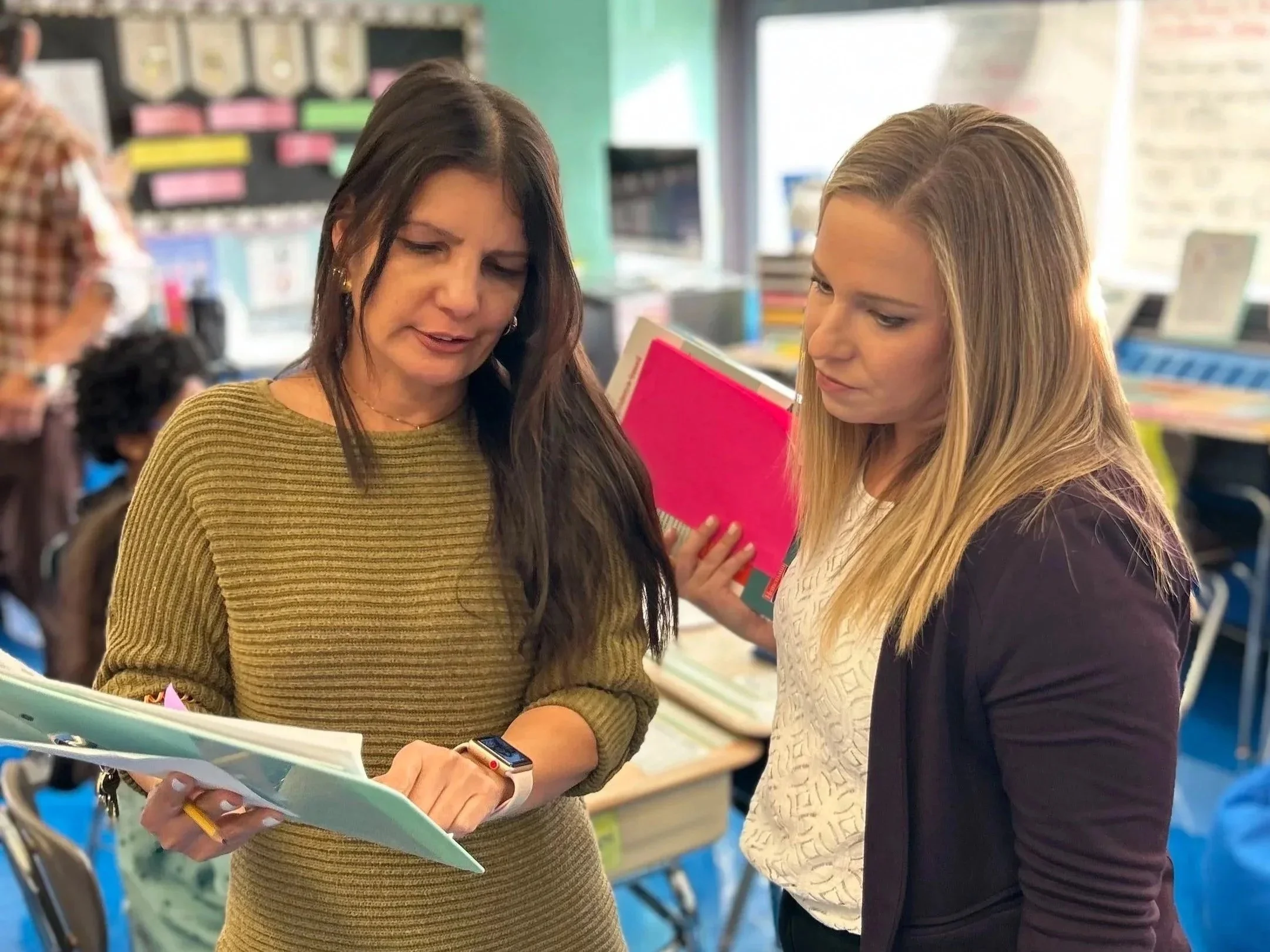
The third major theme highlights the power of collaboration rooted in real classrooms. Over time, teachers moved from hesitant observation to active co-teaching, risk-taking, and shared problem-solving. They planned lessons together, taught side by side, and reflected honestly on what worked and what didn’t.
Teachers consistently identified in-class application as the most valuable aspect of the professional learning experience. Seeing strategies modeled, trying them immediately with students, and reflecting with colleagues helped bridge the gap between theory and practice in ways that traditional professional development often fails to do.
Instructional Approaches to Teaching Writing
Alongside its focus on professional learning design, the study also sheds light on the instructional practices teachers learned and implemented. These approaches reflect a vision of writing instruction that is explicit, responsive, and deeply human.
Teachers worked on:
Building a writing community, using routines and structures that foster independence, engagement, and belonging
Explicit writing instruction, including modeling, scaffolding, and gradual release of responsibility
Providing timely, specific feedback, oriented toward growth rather than correction
Facilitating peer collaboration, so students could learn from and with one another
Small-group writing instruction, flexibly designed in response to students’ strengths and needs
Importantly, these practices were not taught as isolated techniques. They were embedded within teachers’ existing curricula and schedules, helping teachers see how writing could be meaningfully integrated rather than treated as an “extra.”
Research That Reflects Our Values—and Our Work
What makes this publication especially meaningful is how closely it mirrors the work our literacy consulting team does in schools every day. We believe professional learning should be job-embedded, collaborative, sustained, and responsive to context. We believe teachers deserve to be treated as professionals whose knowledge and experiences matter. And we believe writing instruction must remain central—even amid shifting initiatives and increasing standardization.
This research doesn’t just describe those beliefs; it demonstrates them in action.
If you’d like to learn more about my consulting team, the professional learning we offer, and the impact of this work in schools and districts, you can explore our literacy professional development services here:
I am incredibly proud of Jerry and Macie for contributing this thoughtful, rigorous work to the field—and grateful to all the teachers whose voices and classrooms made it possible. This is what it looks like when research and practice meet, grounded in respect, curiosity, and a shared commitment to students and teachers alike.