
How Teaching Conversation Skills Builds Stronger Readers and Writers
March 16, 2026
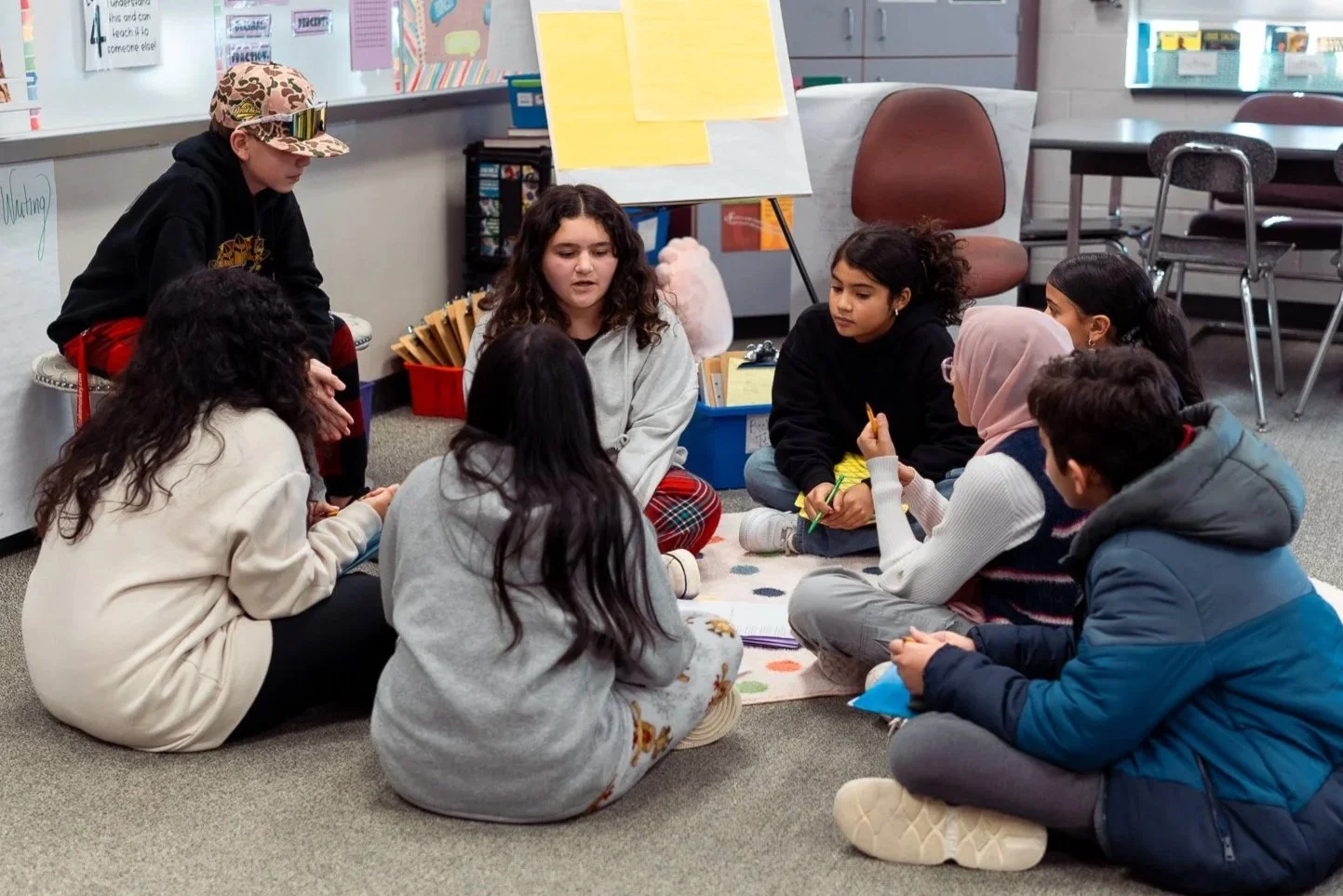
You know that moment when a discussion just takes off? Students are building on each other's ideas, staying on topic, disagreeing respectfully, and so engaged…and you realize you could literally walk out of the room and they'd be fine?
There's a persistent myth that the best thinking—about literature, about ideas, about our own writing—emerges from a single mind working in private. We build classrooms around this myth. However, research confirms that talking about books genuinely helps kids understand them better and talking about writing changes writing in ways that silent, solo drafting never can. Both make learning feel like something worth doing with other people, not just a lonely task you grind through.
WHY TALK MATTERS FOR READING
Talk and comprehension feed each other. Kids need to be actively thinking about their reading before discussion, so they show up with something to say. But then the conversation itself deepens their comprehension even further.
Discussion skills don’t just happen. They benefit from direct instruction, just like everything else. You can instruct students on the specific moves that make a conversation go somewhere, how to extend an idea someone else raised, how to disagree without shutting things down.
Conversation Lessons: A Structure that Builds Critical Skills
It’s not enough to simply make time for conversation. Students need you to teach them strategies about how to have better conversations. Through conversation lessons, students master critical skills that extend far beyond book talk: active listening, debating, thinking flexibly, elaborating on ideas, and responding meaningfully to others.
Depending on students' experience, your conversation lessons may begin with some up-front teaching: sharing a model of a recorded conversation or asking students to watch a fishbowl of a partnership or group who are proficient conversationalists, explicitly teaching a strategy, or explaining what they'll need to keep in mind as they talk. Then, get students talking and coach and prompt them with sentence starters, strategy reminders, and redirections.
With practice, students will start and carry on conversations with increased independence, and more of your teaching can be in response to what you observe. You might move around the room as book clubs talk, listening, nudging when something's not working—what researchers call "spontaneous scaffolding.”.
Reading Strategies that Power Student Talk
You’ll want to balance teaching strategies to deepen comprehension and those that support speaking and listening skills as both support better talk. Here are two ideas:
· Strategy 7.26 Connect Texts to Analyze Theme* While not a conversation strategy perse, this strategy helps readers think more deeply about their books which in turn leads to better discussion. Teach them to identify two or more books with a similar theme and discuss how the theme is developed in similar or different ways across each book.
· Strategy 12.4 Jot, Follow, Fit* Teach children the power of actively listening to others they are in conversation with and to try to not get distracted by holding onto what they might want to say next. When ideas pop into their heads, teach them to jot those ideas down and share when what they want to say fits with the topic under conversation.
WHY TALK MATTERS FOR WRITING
Before a single word hits the page, conversation can help writers rehearse, plan, and clarify what they want to say. When a student explains what they are trying to write to a partner, they hear their own thinking. Offering opportunities to for student writers to give peer feedback develops writers who see their drafts through a reader's eyes.
Structures that Build Writers Together, Over Time
Writing partnerships pair two students who support each other's writing across time—not just for one assignment, but across a unit, a semester, a year. Partners build shared vocabulary, earn each other's trust, and learn to give feedback that moves the writing forward.
When pairing students, I think the best partnerships aren't between students at identical skill levels, nor so far apart that one becomes a tutor. The sweet spot is a mutual give-and-take: each student has something to learn and something to offer.
Writing clubs form around shared purpose: students who want to write a play together, study a mentor text, or publish their fiction as graphic novels. With clubs, students often decide their group and the group’s focus. Because students aren't writing for an assignment but for each other and for an idea they genuinely care about, this structure offers a true chance to collaborate.
Both structures make conversation social by design. They build feedback relationships that deepen over time and give students a reason to care about each other's work—whether that's understanding a text or improving a draft.
Writing Strategies that Power Student Talk
Match strategies to where students are in their writing process. Strategies for collaboration and conversation in writing can help with planning, drafting, revising, editing, and more. Here are a couple ideas:
· Strategy 10.4: Talk Around the Idea, Then Write** Encourage children to share their writing topic or project idea with a partner. Together, they might discuss the form or genre of writing that might be a best fit, the audience for the piece, the details they might include, or even plan the structure aloud together.
· Strategy 10.16: Tell Me: How Does It Affect You?** Set children up to read their piece to a partner, without giving any background or introduction to the piece. Then, they can ask the listening partner about their reactions to the piece. This might mean the feelings evoked, what they learned, or whether they were convinced by the points (depending on genre).
WHAT STUDENTS ARE REALLY BUILDING
When you teach conversation intentionally and practice it across subjects, students gain skills that go way beyond book talk or writing feedback. They get better at saying what they mean clearly and with confidence. They become more invested in reading and writing and more connected to each other. They learn to actually listen—not just wait for their turn, but genuinely respond to what someone said.
Making space for conversation (and teaching how to do it well) might honestly be some of the most important work we do. When students learn to talk well about ideas, they become better readers, better writers, better thinkers, and more connected to the people they're learning with. Those skills go with them everywhere!
*Strategies come from The Reading Strategies Book 2.0 (Serravallo, 2023)
**Strategies come from The Writing Strategies Book (Serravallo, 2017)