
Teaching Is Fundamentally a Human Endeavor:AI-Generated Lesson Plans and the Professional Development Imperative
March 2, 2026
The rise of AI-powered lesson planning tools has promised to revolutionize education by saving teachers time by generating instant lesson plans. While these tools offer undeniable efficiency benefits, mounting evidence suggests they come with a significant caveat: they cannot and should not replace the nuanced expertise of knowledgeable teachers. In fact, without proper teacher oversight and adaptation, AI-generated lessons may inadvertently push classrooms backward toward outdated pedagogical approaches and content.
Hidden Bias in AI-Generated Lessons
An analysis of 90 lesson plans from commercial generators found that AI-generated content predominantly promotes teacher-centered classrooms with limited opportunities for student choice, goal-setting, and meaningful dialogue (Social Innovations Journal, 2025). This "pedagogical bias" toward lecture-style teaching represents a step backward from decades of educational research supporting gradual release of responsibility, engagement, and students as active participants in their own learning.
Beyond pedagogical biases, scholars have documented how AI works against linguistically and culturally sustaining practices. Because models learn from web content and mainstream curricula, they frequently center Euro-American examples as the "general" case reinforcing existing power hierarchies (Benjamin, 2019).
The Professional Development Imperative
If schools are using AI tools for lesson planning, they must simultaneously invest in professional development to ensure teachers plan and deliver lessons based on the latest research, proven practices, and understanding of their students. In-service teachers may have limited knowledge regarding the pedagogical limitations of AI applications, which could create a perfect storm: teachers using time-saving AI tools that may actually diminish instructional quality (CITE Journal, 2024).
Effective professional development must address two critical areas:
1. PROMPT ENGINEERING FOR EDUCATION Teachers need practice crafting prompts that guide AI toward generating more student-centered, engaging lessons. To improve output, educators must specify lesson structures, differentiation strategies, critical student information, and engagement techniques.
2. CRITICAL EVALUATION SKILLS Perhaps more important, teachers need expertise to evaluate and modify AI-generated content. This requires deep pedagogical knowledge—understanding not just what makes a lesson work, but why certain approaches succeed with specific student populations.
Why Teacher Expertise Remains Irreplaceable
The fundamental limitation of AI lesson planning tools is their inability to understand the complex, dynamic nature of actual classrooms. They cannot account for the learning profiles of individual students, the social dynamics within a particular classroom, the cultural context that makes learning relevant, the spontaneous teaching moments that arise from student questions, or the subtle adjustments needed when a lesson isn't landing as planned.
AI can provide a starting point but creating effective instruction requires the irreplaceable expertise of a knowledgeable teacher who understands both the science and art of teaching.
Building Teacher Capacity
To prepare and deliver lessons that resonate with every student, it's critical we develop teachers' planning capabilities and give them necessary background knowledge to create their own lessons or augment what AI generates.
1. STUDY AND USE PLANNING TEMPLATES WITH PEDAGOGICAL PURPOSE Planning templates must be grounded in research-based practices that prioritize student engagement and active learning. These templates embed pedagogical decision-making into the planning process itself, prompting teachers to consider learning goals, differentiation, student voice, and formative assessment throughout the lesson.
2. INFUSE HUMAN JUDGEMENT AND KNOWLEDGE OF STUDENTS No AI program can predict all student responses teachers encounter in real classrooms. Great lessons emphasize planning considerations requiring human judgment: understanding students' cultural backgrounds, recognizing individual learning trajectories, anticipating misconceptions specific to individual classroom communities, or any of the hundreds of responsive moves teachers make daily.
3. STUDY MODEL LESSONS: ANNOTATED VIGNETTES Studying annotated lessons reveal the invisible mental work of teaching—the rapid assessments, strategic choices, and moment-by-moment adjustments that make lessons successful. AI can generate a lesson plan, but it cannot teach you how to think like an expert teacher.
4. STUDY MODEL LESSONS: VIDEO AND LIVE CLASSROOM PRACTICE Classroom videos show how skilled teachers adapt their plans in real-time in real classrooms, responding to student confusion, building on unexpected insights, and pivoting when necessary. This adaptive expertise—knowing not just what to do but when and why to change course—is critical to effective instruction because real classrooms are filled with surprises.
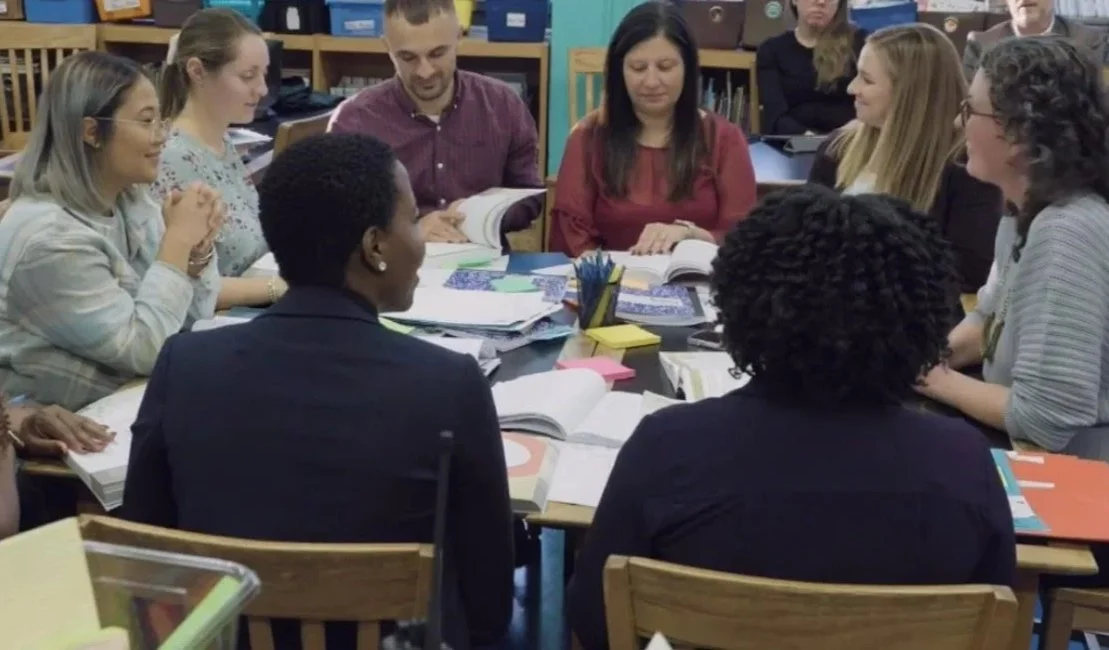
5. BUILD A COMMUNITY OF PRACTICE Watching a coach model in your classroom, co-teaching with a trusted colleague, and poring over student data in community allows teachers to share contextual knowledge, discuss what works in similar settings, and collectively problem-solve challenges. If we start with AI-generated lesson plans, we need to circle up with other humans, collaborate, and ensure we are meeting the needs of our unique students.
6. RELY ON A TRUSTWORTHY RESOURCE Most AI-generated lessons are one-offs created to address a particular objective. But great lessons build upon each other—across a unit, classrooms, and even subjects. Research shows that having a trustworthy resource teachers can use leads to teaching improvements with measurable impact on student learning (American Educational Research Journal, 2009).
The Path Forward: AI as Tool, Not Teacher
The use of AI in education is here, but it must be approached with clear eyes about its limitations. Schools and districts must resist the temptation to view AI lesson planning tools as a silver bullet for teacher workload or a substitute for pedagogical expertise.
Instead, we should frame current AI as what it truly is: a sophisticated tool that can generate first drafts and save time on routine tasks, but one that requires significant human expertise to yield quality educational experiences.
Conclusion: Investing in Human Expertise
As we navigate the integration of AI into education, we must remember that teaching is fundamentally a human endeavor. It requires empathy, cultural understanding, relationship-building, and the ability to inspire and adapt—qualities that no algorithm can replicate. While AI tools can certainly support teachers' work, they cannot replace the irreplaceable: the knowledgeable, caring, responsive expertise of a skilled educator.
We need to remain committed to teaching as a profession that requires expertise, judgment, and continuous learning.